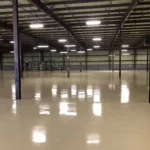




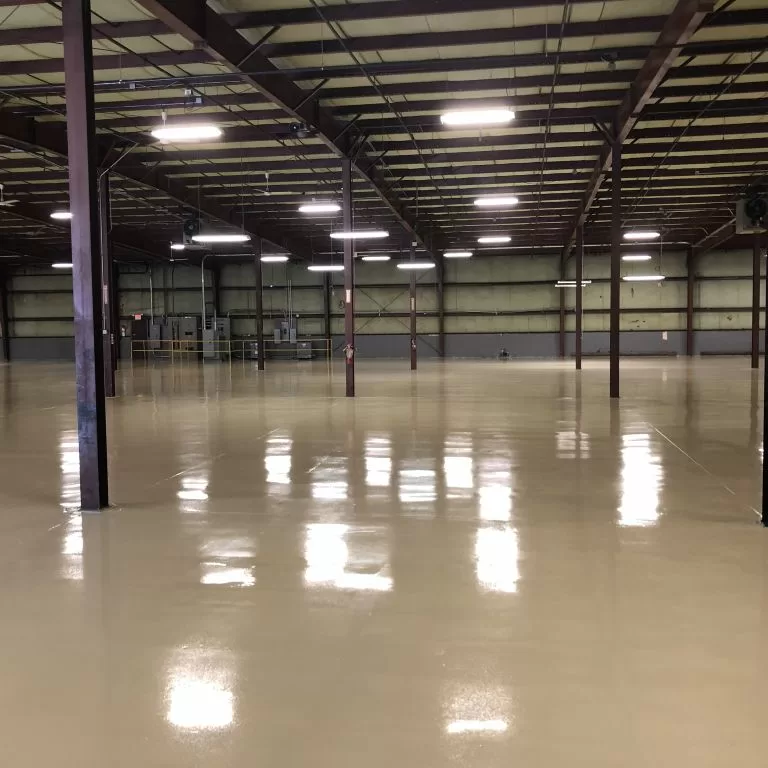
Walk into any modern distribution center and you will notice the floor before you notice anything else. It is smooth, glossy, and somehow feels cleaner than the rest of the building. That is not an accident. Most large facilities have moved away from bare concrete and onto a resin based coating system, and the shift has a lot to do with how much punishment a warehouse floor actually takes on a daily basis.
Forklifts, pallet jacks, dropped tools, chemical spills, and constant foot traffic wear down untreated concrete faster than most owners expect. A coating system built for industrial use is designed to absorb that abuse instead of passing it straight through to the slab underneath.
What Exactly Is This Flooring System
At its core, the system is a two part resin, usually a combination of epoxy resin and a hardening agent, that is mixed on site and rolled or troweled over prepared concrete. Once it cures, it forms a hard, seamless layer that bonds tightly to the slab. Depending on the application, contractors might build it up in several layers: a primer coat to soak into the porous concrete, a build coat for thickness and strength, and a top coat for gloss, chemical resistance, and UV stability.
Thickness varies a lot depending on use. A light duty office floor might only need a coating a few mils thick, while a heavy manufacturing floor with forklift traffic could call for a broadcast or quartz filled system several millimeters deep.
Why Warehouses Specifically Benefit
Warehouses have a few characteristics that make this type of coating almost a natural fit.
First, the floor area is huge, often tens of thousands of square feet, and any downtime for repairs is expensive. A properly installed coating drastically cuts down on the frequency of repairs compared to bare or painted concrete.
Second, warehouses deal with constant wheeled traffic. Steel wheeled carts and forklift tires generate friction and impact that chip away at unprotected concrete over months and years. A cured resin surface spreads that load more evenly and resists abrasion far better than raw concrete.
Third, many warehouses store goods that are sensitive to contamination, whether that is food packaging, pharmaceuticals, or electronics. Bare concrete sheds fine dust constantly, and that dust can settle on inventory, machinery, and even get pulled into HVAC systems. A sealed floor stops that process almost entirely, which is one reason facility managers frequently pair this discussion with warehouse epoxy flooring when they are researching long term solutions for dust control and durability.
The Practical Benefits Beyond Looks
A glossy floor is nice, but the real value shows up in day to day operations.
- Cleaning takes a fraction of the time because there are no pores or cracks for grime to hide in.
- Reflectivity from a glossy top coat can noticeably brighten a warehouse, sometimes reducing the number of overhead lights needed to hit safety lux requirements.
- Chemical spills, oils, and cleaning agents sit on top of the coating instead of soaking into the slab, which makes cleanup faster and protects the concrete from staining or degrading.
- Line marking for safety zones, walkways, and racking areas stays crisp for years instead of fading within months.
Common Types Used in Warehouse Settings
Not every facility needs the same system. A few common options include:
Self leveling epoxy, which creates a smooth, uniform surface and works well for general storage areas. Mortar systems, which are thicker and more impact resistant, often used near loading docks where heavy equipment repeatedly hits the floor. Quartz or flake broadcast systems, which add slip resistance and a decorative element while still holding up to traffic. Anti static or ESD systems, used in facilities that store or assemble electronics where static discharge could damage sensitive components.
Choosing the right one usually comes down to a conversation with an experienced installer who can assess the traffic type, chemical exposure, and budget.
What Installation Actually Involves
The process is more involved than people expect. It typically starts with surface preparation, usually diamond grinding or shot blasting to open up the concrete pores and remove any existing coatings or contamination. Skipping this step is the single biggest reason coatings fail early. After prep, moisture testing is often done, especially on slabs that sit on or below grade, since trapped moisture vapor can push a coating off the concrete from underneath.
Once the slab is ready, the primer goes down first, followed by the build coat, and finally the top coat. Cure times vary depending on temperature and humidity, but most facilities can expect the area to be walkable within a day and ready for full traffic within a few days to a week.
Is It Worth the Investment
For most warehouses handling regular vehicle traffic, storage rotation, and any kind of dust sensitive inventory, the answer tends to be yes. The upfront cost is higher than simply painting concrete, but the lifespan, often ten years or more with proper maintenance, and the reduction in ongoing repair and cleaning costs usually make up the difference within a few years.
How Color and Finish Choices Affect Daily Operations
Most people assume the color of a warehouse floor is purely cosmetic, but it actually plays a functional role once the facility is up and running. Lighter shades of gray, tan, or even a pale blue tend to reflect more overhead light back into the space, which can genuinely reduce eye strain for staff working long shifts under fluorescent or LED fixtures. Darker colors hide oil stains and tire marks better in areas with heavy vehicle traffic, which is why loading docks and forklift lanes are sometimes finished in a different shade than the surrounding storage aisles.
Contrast is another practical consideration. Facilities that use colored zoning, such as a different shade for pedestrian walkways versus forklift paths, find that workers naturally respect those boundaries more consistently than when the zones are only marked with paint lines on an otherwise uniform floor. It is a small design decision that has a measurable effect on everyday safety habits.
Working With an Experienced Contractor
The quality of the finished floor depends as much on the installer as it does on the product itself. Two crews using identical materials can produce very different results depending on how carefully they handle surface preparation, mixing ratios, and environmental conditions during application. When vetting a contractor, ask to see photos or references from warehouse projects specifically, since retail or residential epoxy work does not always translate to the demands of a high traffic industrial floor.
It also helps to ask direct questions about their process. A contractor who can clearly explain how they test for moisture, what grinding equipment they use, and how they handle unexpected issues like discovering hidden cracks mid project is generally more trustworthy than one who gives vague answers or rushes through the walkthrough.
Planning for Future Layout Changes
Warehouses rarely stay static. Racking gets reconfigured, new equipment gets added, and traffic patterns shift as the business grows. A coated floor holds up well to this kind of change far better than bare concrete, since anchor points from old racking can be patched and re-coated locally without redoing the entire floor. Facility managers who anticipate future layout changes sometimes ask installers to apply a slightly more durable system across the whole floor from the start, rather than only in currently known high traffic zones, simply because it is cheaper to build in that flexibility upfront than to upgrade specific areas later.
A Quick Look at the History of Resin Flooring
Resin based industrial flooring has been around in some form since the mid twentieth century, originally developed for aerospace and manufacturing applications where extreme durability and chemical resistance were non negotiable. Over the following decades, the formulations became more refined, cure times shortened, and the range of finishes expanded well beyond the basic gray or clear coats of the earliest products. What started as a specialty industrial product has become the default flooring choice across warehousing, retail back rooms, automotive shops, and countless other commercial settings, largely because the core benefits of durability, chemical resistance, and low maintenance translate so well across such a wide range of use cases.
Understanding this background helps explain why the technology is so mature and reliable today. Decades of real world use across demanding industrial environments have shaped the current generation of products, which is part of why failures, when they do happen, usually trace back to installation shortcuts rather than any fundamental weakness in the resin chemistry itself.
Frequently Asked Questions
Does this type of flooring work on old, damaged concrete?
In most cases, yes. Cracks and minor damage can be repaired and filled before the coating goes down. Severely deteriorated slabs may need structural repair first, but a contractor can usually assess this during a site visit.
How slippery is a glossy coated floor?
A pure gloss finish can be slick when wet, which is why many facilities add a texture additive or matte finish in areas prone to spills, such as near loading docks or wash bays.
Can it be installed while the warehouse stays operational?
Sections can often be coated in phases so the rest of the facility keeps running. This does extend the overall project timeline but avoids a full shutdown.
What is the typical lifespan before recoating is needed?
Most industrial systems last between eight and fifteen years depending on traffic volume and maintenance, though high wear zones like forklift lanes may need touch ups sooner.
Does temperature affect how well it holds up?
Extreme temperature swings can stress any coating over time, but modern formulations are built to handle typical warehouse conditions, including cold storage environments when the right product is chosen.